Whether your project is an animated feature or motion graphicsfor corporate marketing, making the right decisions about how you'll construct your piece is key. I combined advice on how to choose an animation technique and style from Liz Blazer's book Animated Storytelling: Simple Steps for Creating Animation and Motion Graphics with research on Disney's 12 Basic Principles of Animation to create 2 logo stingers.
Month: September 2020
Module 4: Production and Post (Stop Motion II)
After completing pre-production work for 2 stop motion animation ideas in my last post, I continued on to production and post-production for one of them. With guidance on sound choices and establishing consistent rules for a story’s world from Liz Blazer’s Animated Storytelling: Simple Steps for Creating Animation & Motion Graphics, I brought to life my linear story idea titled “A Bigger Purrr-pose.”
Module 3: Pre-Production in Action (Stop Motion I)
With advice on color choices and experimentation in animation from Liz Blazer's Animated Storytelling: Simple Steps for Creating Animation & Motion Graphics, I began the pre-production process of creating a stop motion animation. In this stage of development I wrote pre-production summaries for 2 original stories (one linear in structure and one non-linear), drew storyboards, and shot a stop motion test to familiarize myself with the technical process.
Module 2: Mixing Motion (Cinemagraphs)
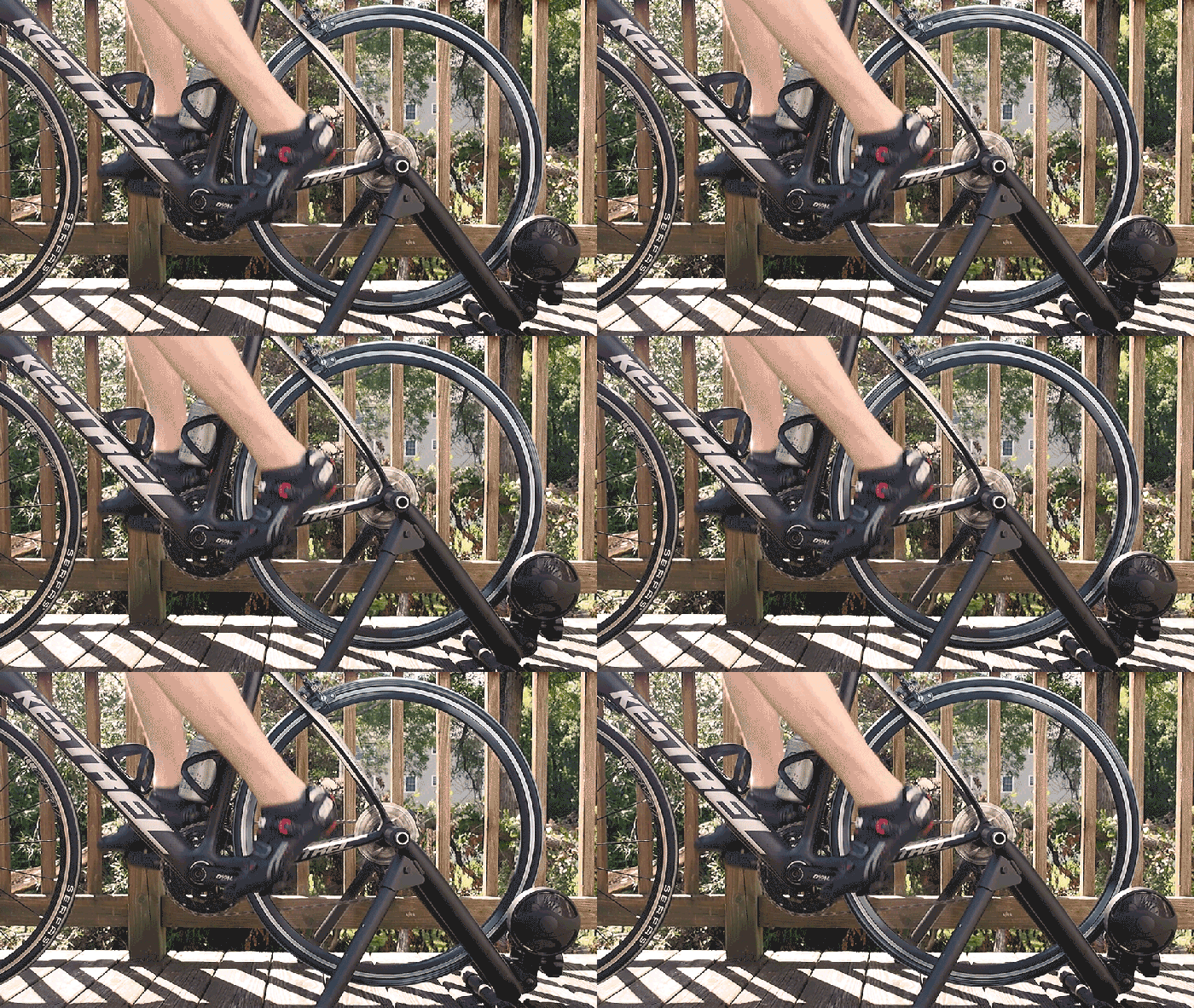
Cinemagraphs are a recently invented and popularized form of a seamlessly looping GIF or video in which still photography and video are combined to make a dynamically interesting visual that tells the story of a moment in time. With tips on how to craft a good animated story from Liz Blazer's book Animated Storytelling: Simple Steps for Creating Animation & Motion Graphics, I've created 4 brief motion stories from a day in my life in the form of cinemagraphs using Adobe Photoshop and After Effects.